The Recasting / 再 鑄
2025
sound installation
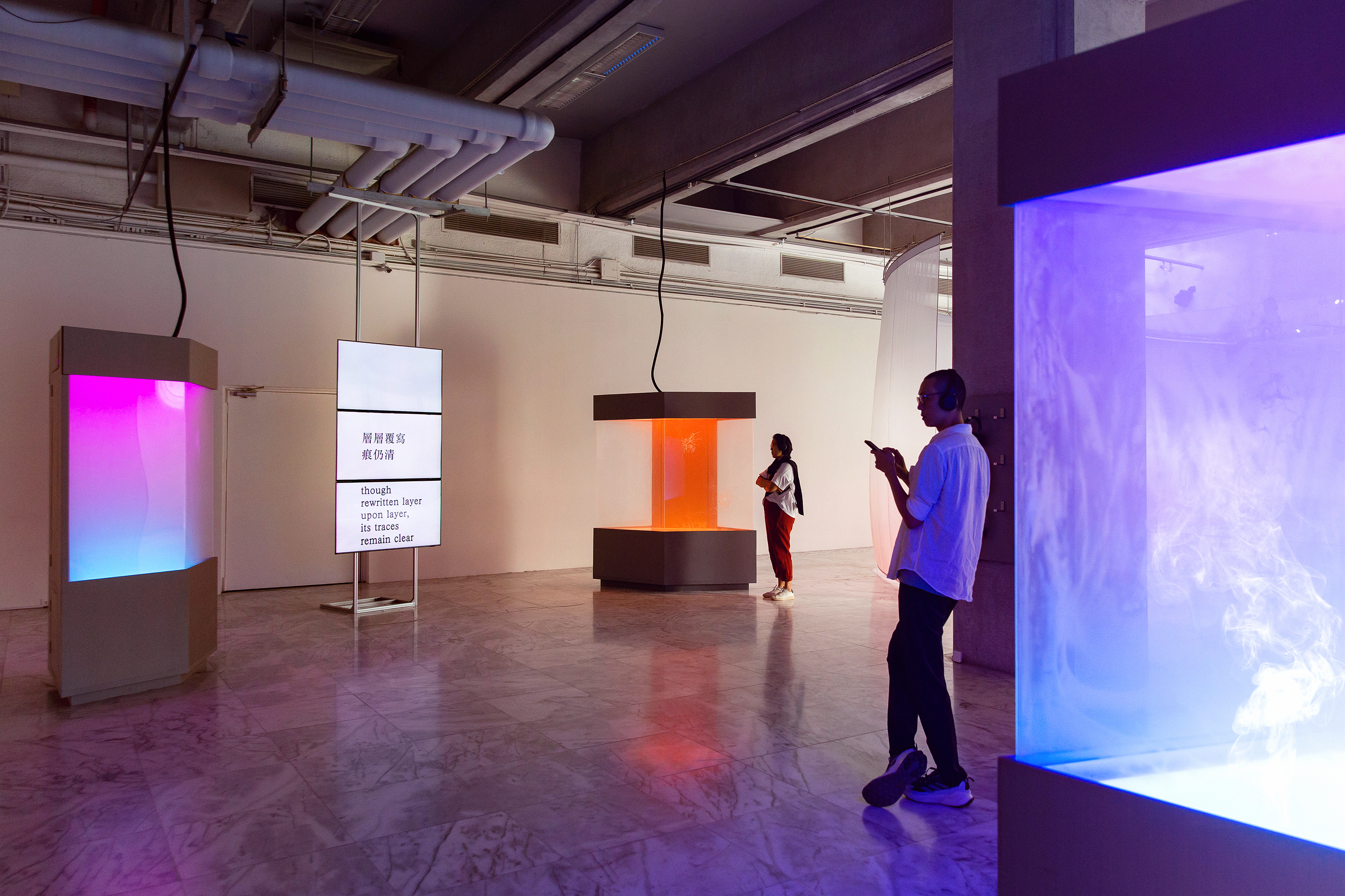
3 channels sound, 3 vitrines, LED lights, fog machine, 30 min on loop
graphite drawing, 42 x 42 cm x 3 P
work commissioned by 14th Taipei Biennial
The Boai Ding (Tripod), displayed in front of the National Palace Museum

Installation view at Taipei Biennial in Taipei, Taiwan, 2025
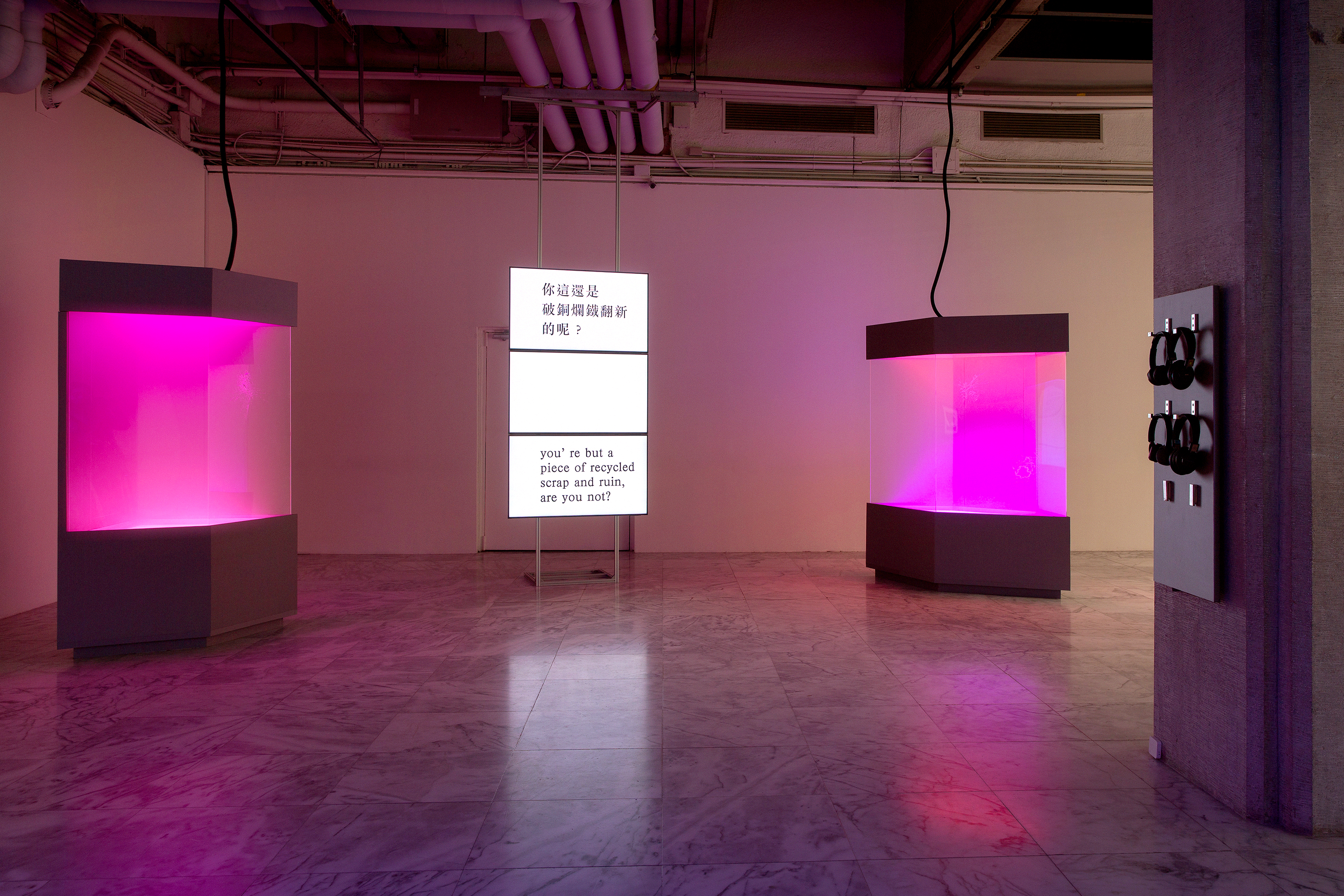
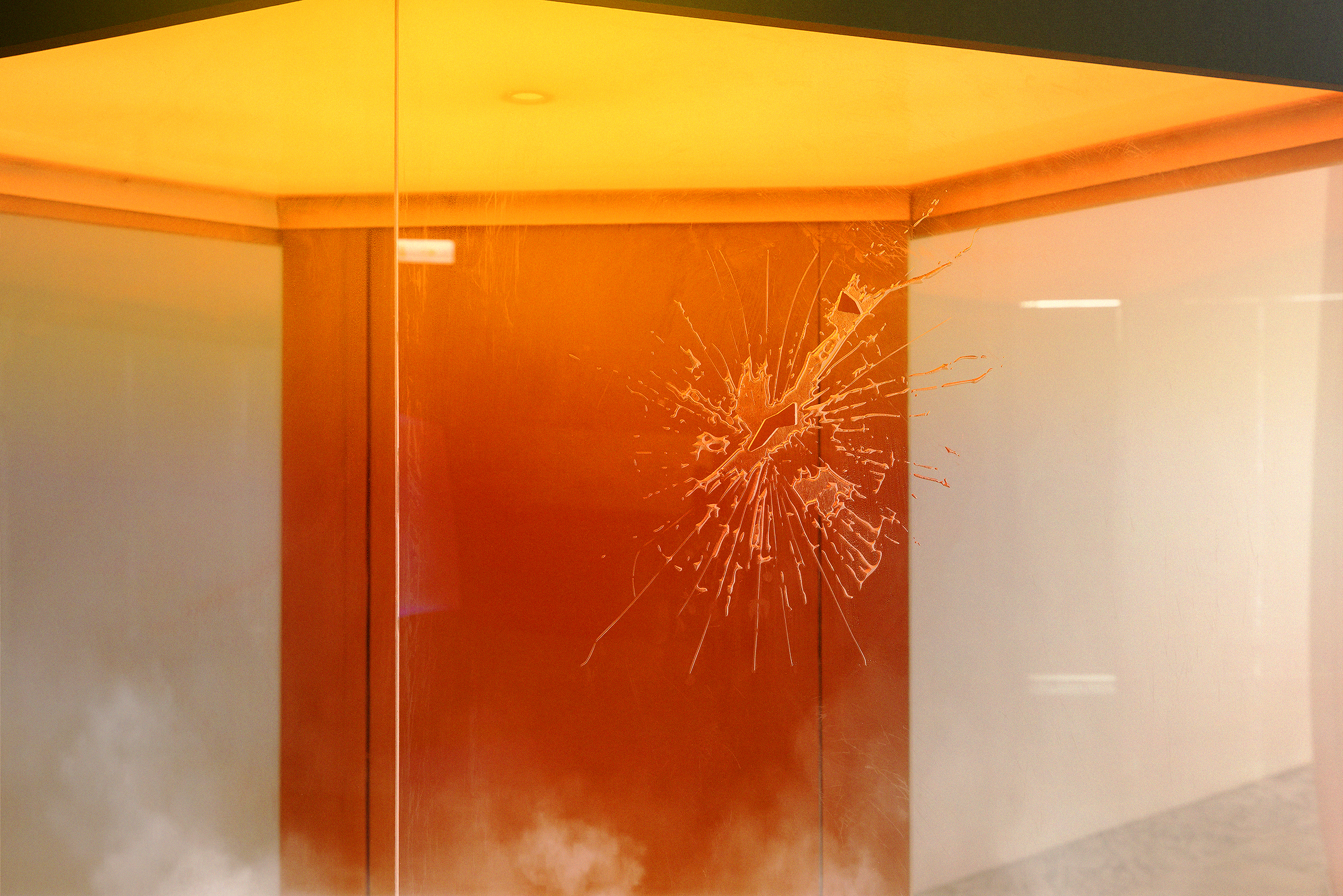
Following Japan’s defeat, the Chinese Civil War erupted, prompting repeated relocations of the National Palace Museum’s collections. In 1951, the Japanese government decided to return the tripod to the Chiang Kai-shek regime in Taiwan, where it was received by the Central Museum and Library Institution. The object’s trajectory has been defined by successive acts of remaking, shaped by the shifting ideological and political forces of the time. Ultimately, it was reconfigured into its present form as the Boai Ding, now installed at the entrance to the National Palace Museum in Taipei. The plum blossom motif and the inscription “Boai” (“Universal Love”) were superimposed over the original cherry blossom emblems and imperial waka poems—symbols of Japanese sovereignty—thus transforming the object into a palimpsest of political and cultural inscriptions.
Installation view at Taipei Biennial in Taipei, Taiwan, 2025
Installation view at Taipei Biennial in Taipei, Taiwan, 2025
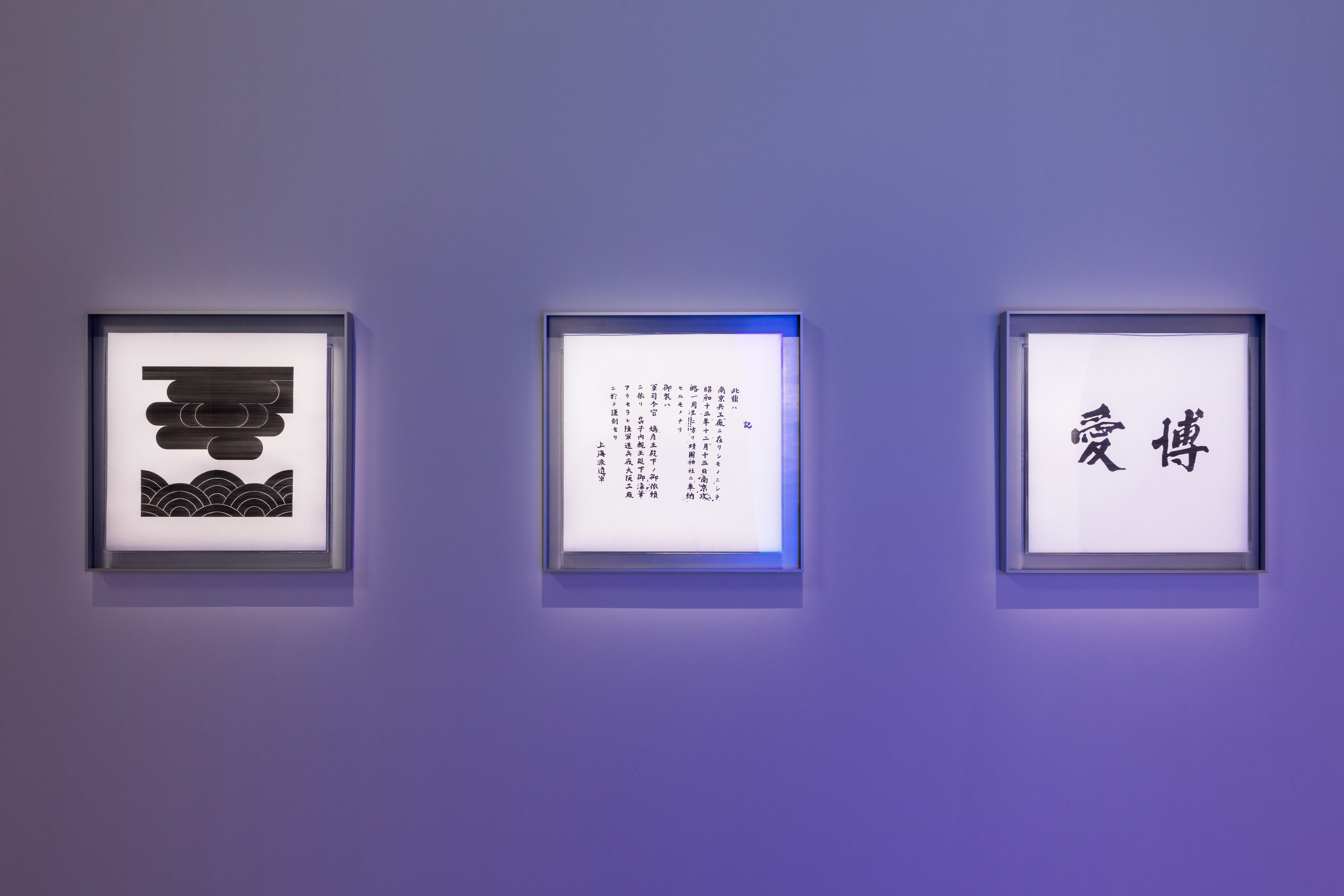
Installation view at Taipei Biennial in Taipei, Taiwan, 2025
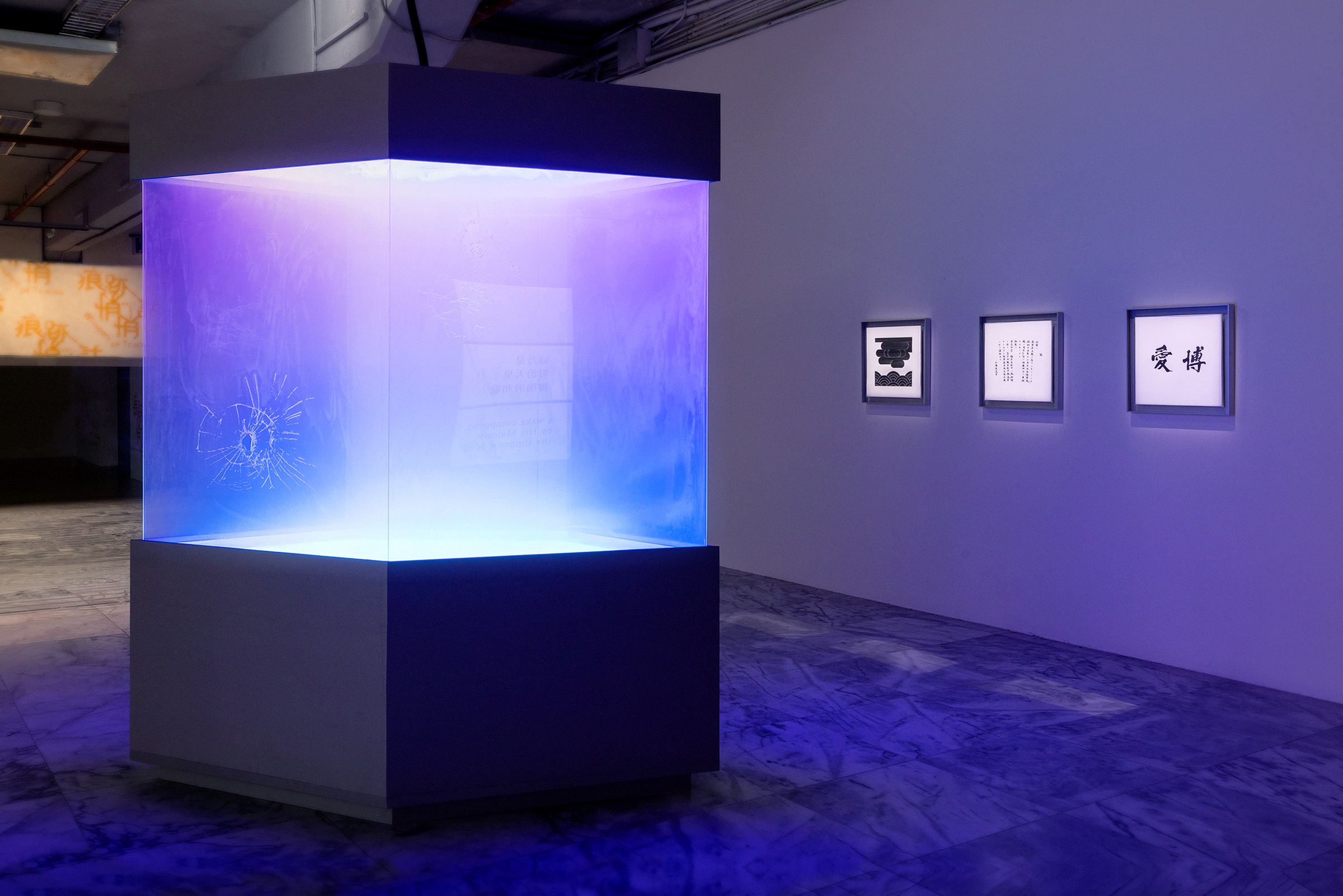
Shepherd Technology Art and Mothra Productions
Related Information ︎
︎︎︎ 2025 Taipei Biennial
︎︎︎ e-flux
︎︎︎ ARTFORUM
︎︎︎ OCULA
︎︎︎ FRIZEZ
︎︎︎ SLEEK
work
The Alp
The Bedroom
The Cable
The Camera (16)
The Camera (17)
The Camera (36)
The Camera (65)
The Chat
The Cultural Center
The Dust
The Figure
The Gate
The Jog
The Lighting
The Link
The Looty
The Map
The Mask
The Postcard
The Route
The Sallow Man
The Sculpture
The Smart City
The Toyota
The Vitrine
collective
Bengawan Solo
Café Togo
Songs of SPECX The Currency-Sensing 01 The Currency-Vinyl The Gesture I
The Gesture II The Guestbook The Sallow Sea
exhibition
Ghost In The Sea Too Loud A Dust
On The Faience Of Your Eyes There Are Lights That Never Go Out I'll Be Back Resistance is Futile
Modern Life is Dull
The Alp
The Bedroom
The Cable
The Camera (16)
The Camera (17)
The Camera (36)
The Camera (65)
The Chat
The Cultural Center
The Dust
The Figure
The Gate
The Jog
The Lighting
The Link
The Looty
The Map
The Mask
The Postcard
The Route
The Sallow Man
The Sculpture
The Smart City
The Toyota
The Vitrine
collective
Bengawan Solo
Café Togo
Songs of SPECX The Currency-Sensing 01 The Currency-Vinyl The Gesture I
The Gesture II The Guestbook The Sallow Sea
exhibition
Ghost In The Sea Too Loud A Dust
On The Faience Of Your Eyes There Are Lights That Never Go Out I'll Be Back Resistance is Futile
Modern Life is Dull